
A Mediterranean Cottage with a Craftsman Soul
A Mediterranean Cottage with a Craftsman Soul
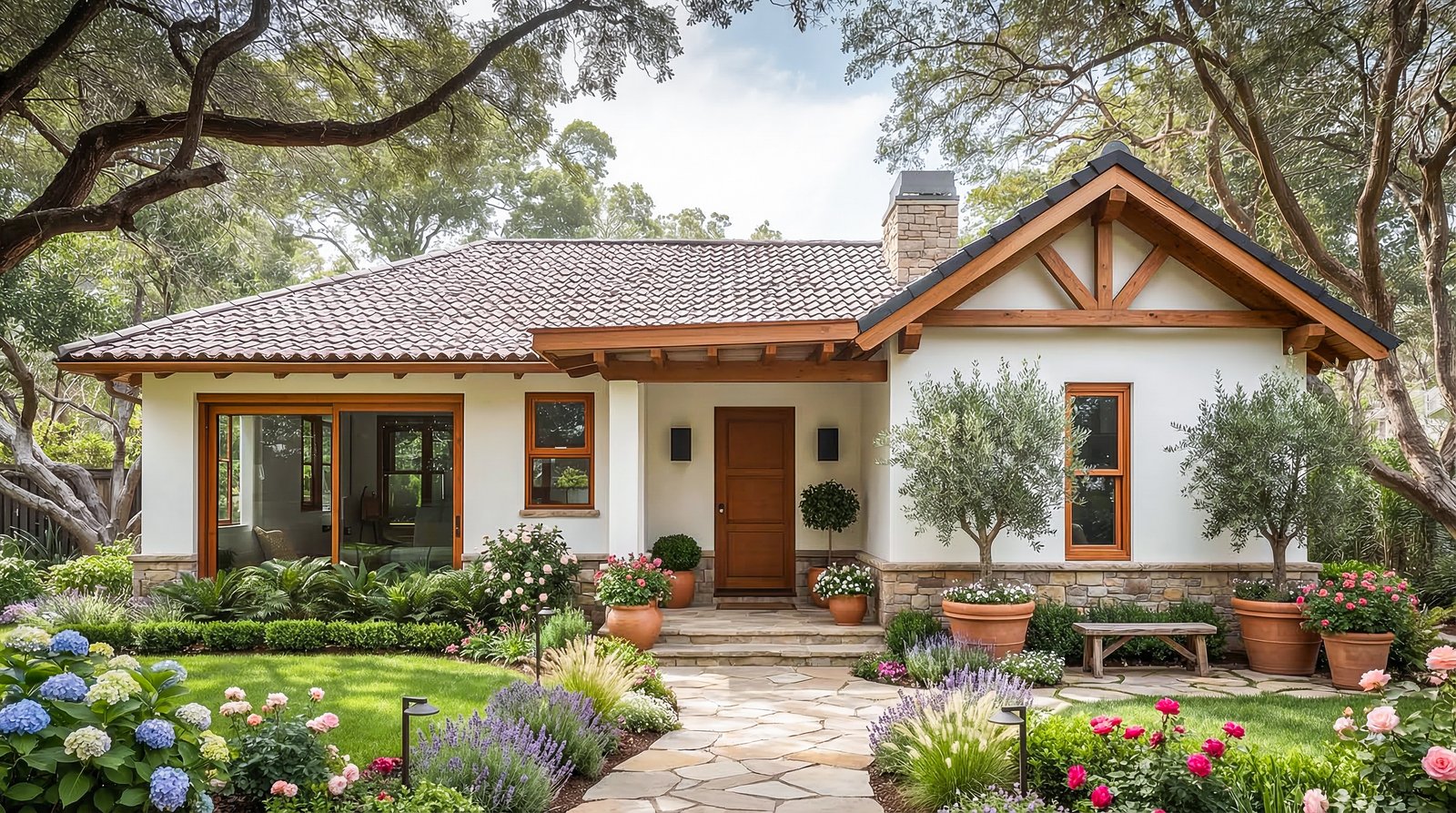
There's a particular kind of house that feels instantly familiar even the first time you see it — warm, sun-washed, a little rustic, a little refined. This single-story concept home is a great example of that feeling in built form. It borrows the whitewashed stucco walls and terracotta roof tiles of Mediterranean architecture, then grounds them with the heavy timber trusses and stone base of the American Craftsman tradition. The result is a hybrid style that reads as both coastal-European and distinctly Californian.
Reading the Exterior
The roofline does a lot of storytelling here. A gentle hip roof in weathered clay tile covers most of the house — quiet, low-slung, and clearly Mediterranean in origin — while the entry wing breaks into a steep front gable with exposed wood trusses and a king-post detail. That single gable is the architectural exclamation point of the whole composition: it announces the entrance, adds vertical interest to an otherwise horizontal massing, and pulls in a Craftsman bungalow accent without fighting the Mediterranean base.
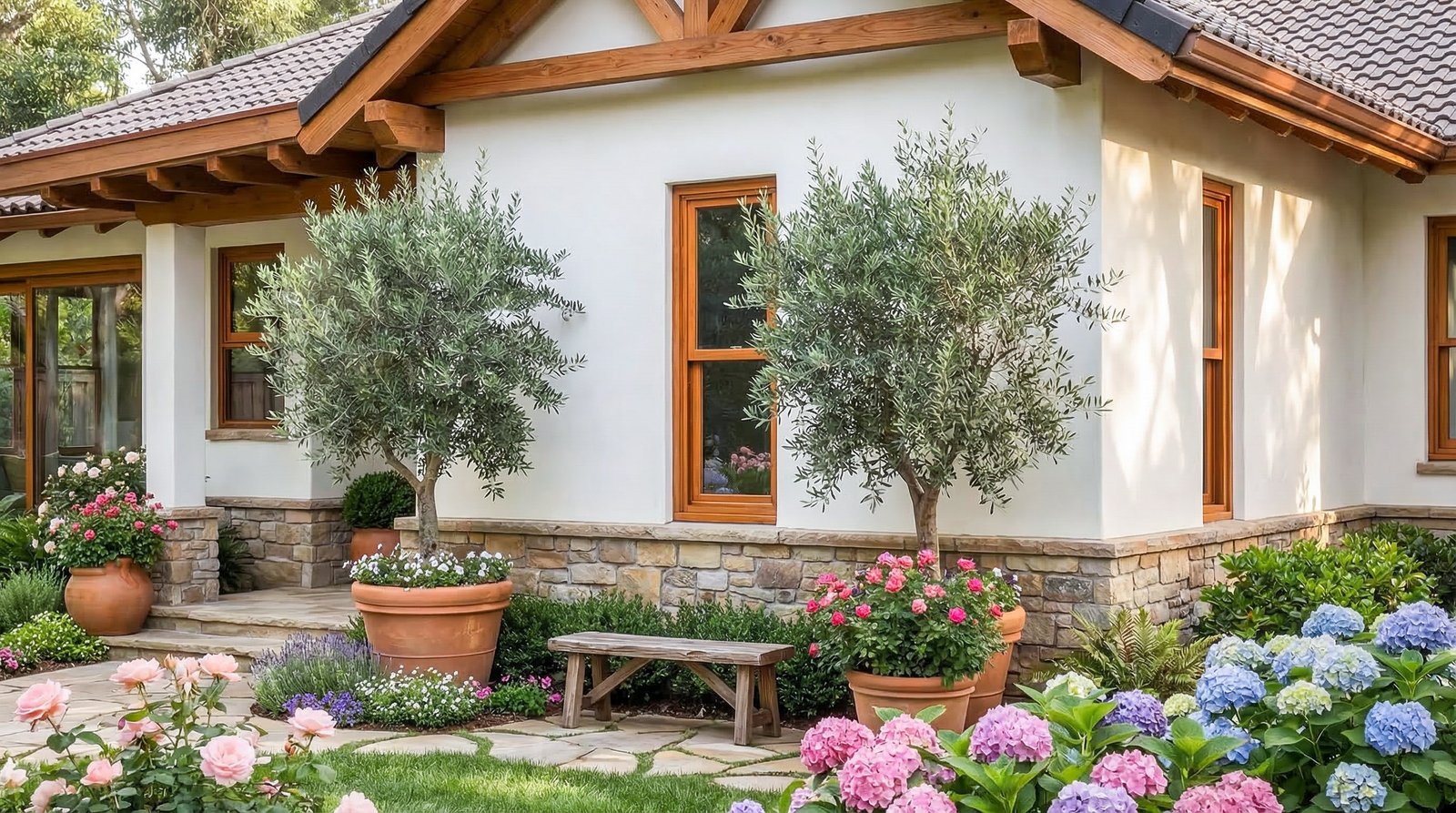
Materiality reinforces the mix. Fieldstone wainscoting wraps the lower third of the walls, transitioning into smooth cream stucco above — a classic way to visually "root" a light-colored house into its landscape. Stained wood-framed windows, a substantial plank door, and a stone chimney with a simple cap tie the palette together without adding visual noise. Structurally and materially, nothing here is exotic; the impact comes from proportion and restraint.
The landscaping deserves equal credit for the mood. Potted olive trees flank the entry — a small but deliberate nod to Mediterranean gardens — while informal drifts of hydrangea, lavender, roses, and ornamental grass soften the stone path. It's a garden that looks tended rather than manicured, which suits the house's relaxed, lived-in character.
Inside: Warmth Built from Texture, Not Color
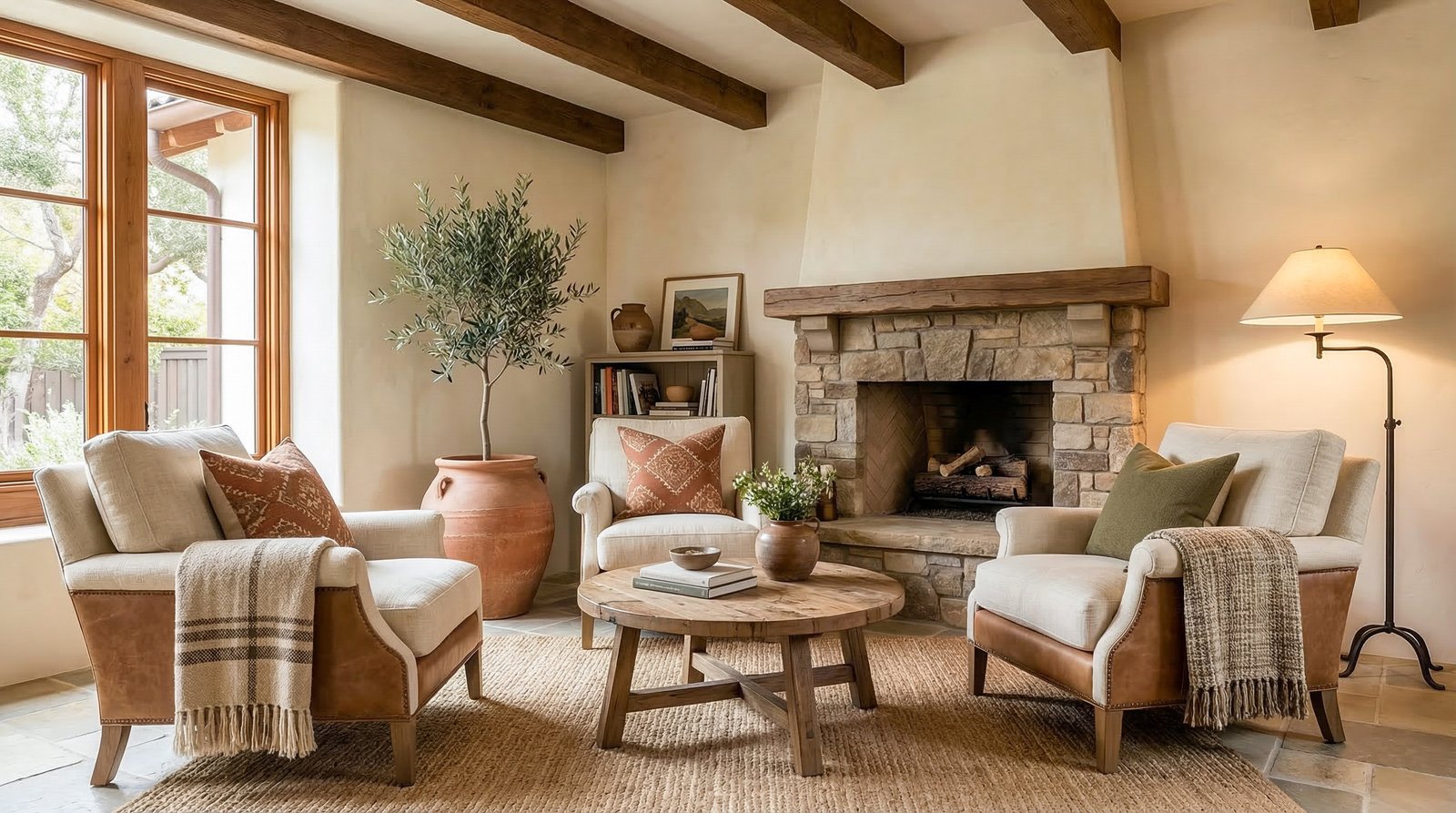
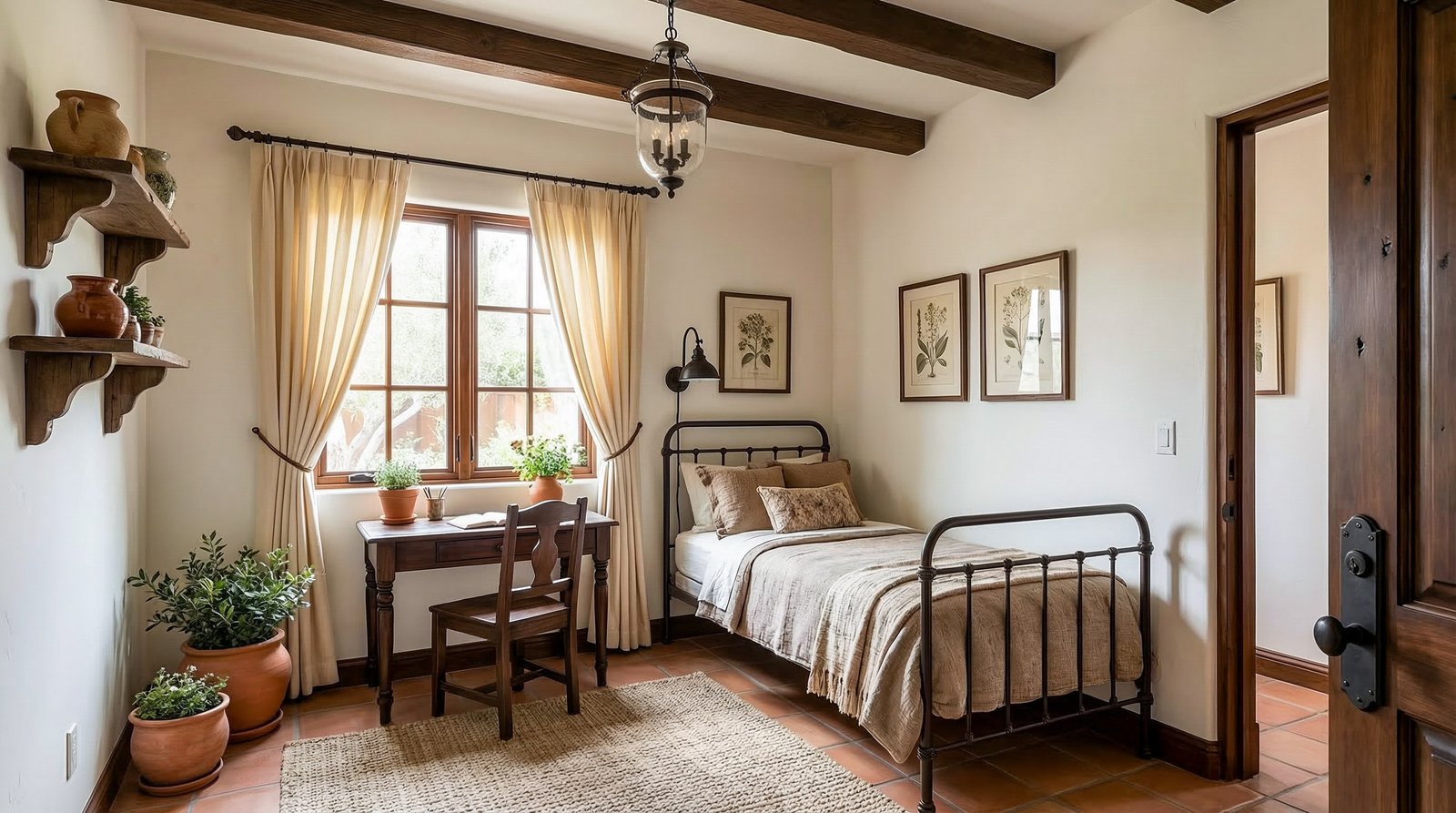
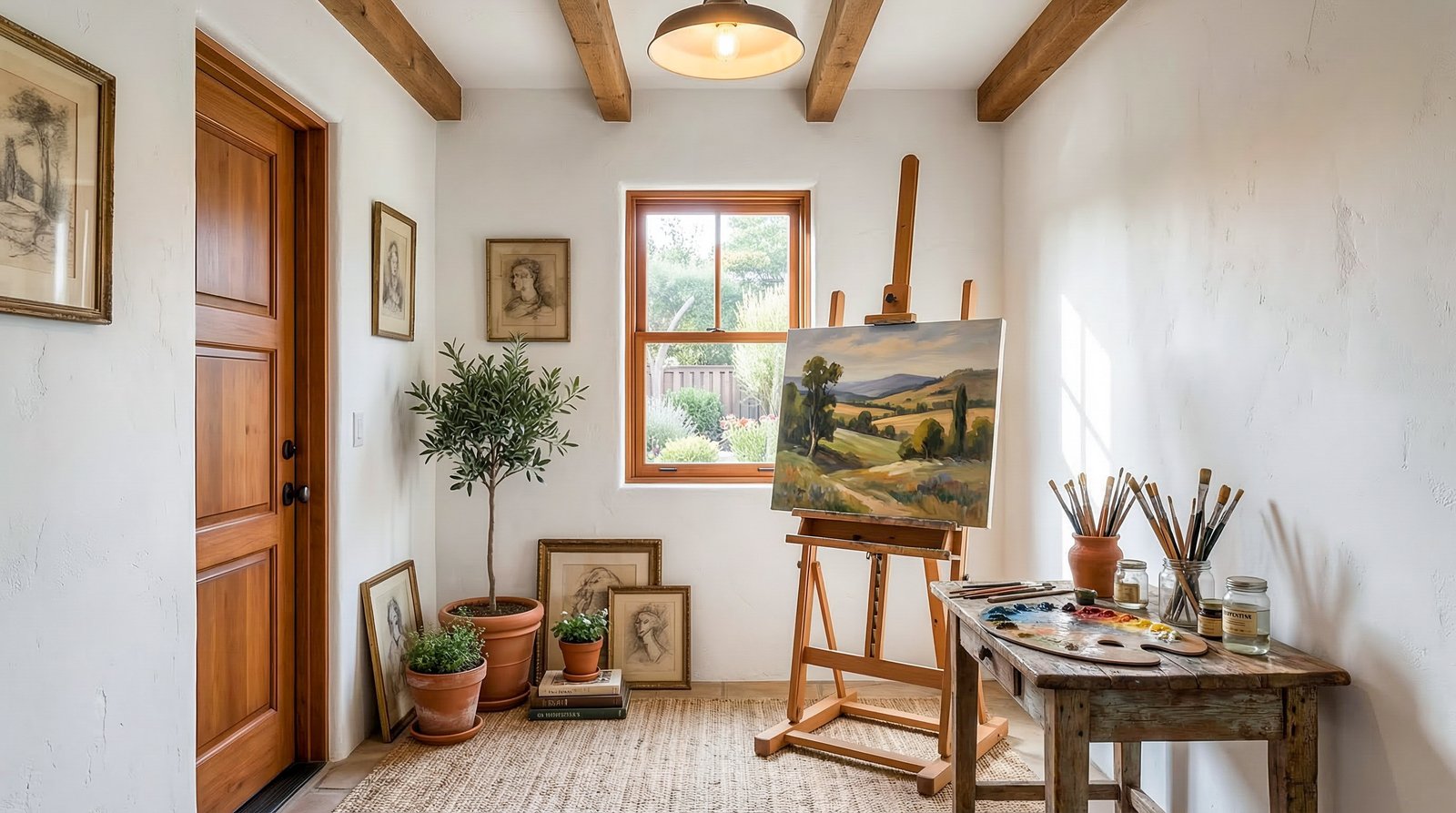
Walk through the front door and the material language continues almost seamlessly. Exposed dark wood ceiling beams run through every room, immediately establishing scale and a sense of craftsmanship overhead. Walls stay in the same neutral, warm-white family as the exterior, which lets furniture and textiles carry the color story instead.
Living room: A rugged stone fireplace with a reclaimed timber mantel anchors the seating area, flanked by upholstered armchairs in leather and linen. Terracotta urns doubling as planters and side tables, a woven jute rug, and a low round wood coffee table keep the room tactile and unpretentious — comfortable rather than showroom-perfect.
Bedroom: A wrought-iron bed frame and simple linen bedding give this room a slightly more pared-back, almost farmhouse feel, while terracotta tile flooring and potted herbs on the windowsill keep it consistent with the house's Mediterranean thread. Botanical prints and open wood shelving add just enough personality without cluttering the space.
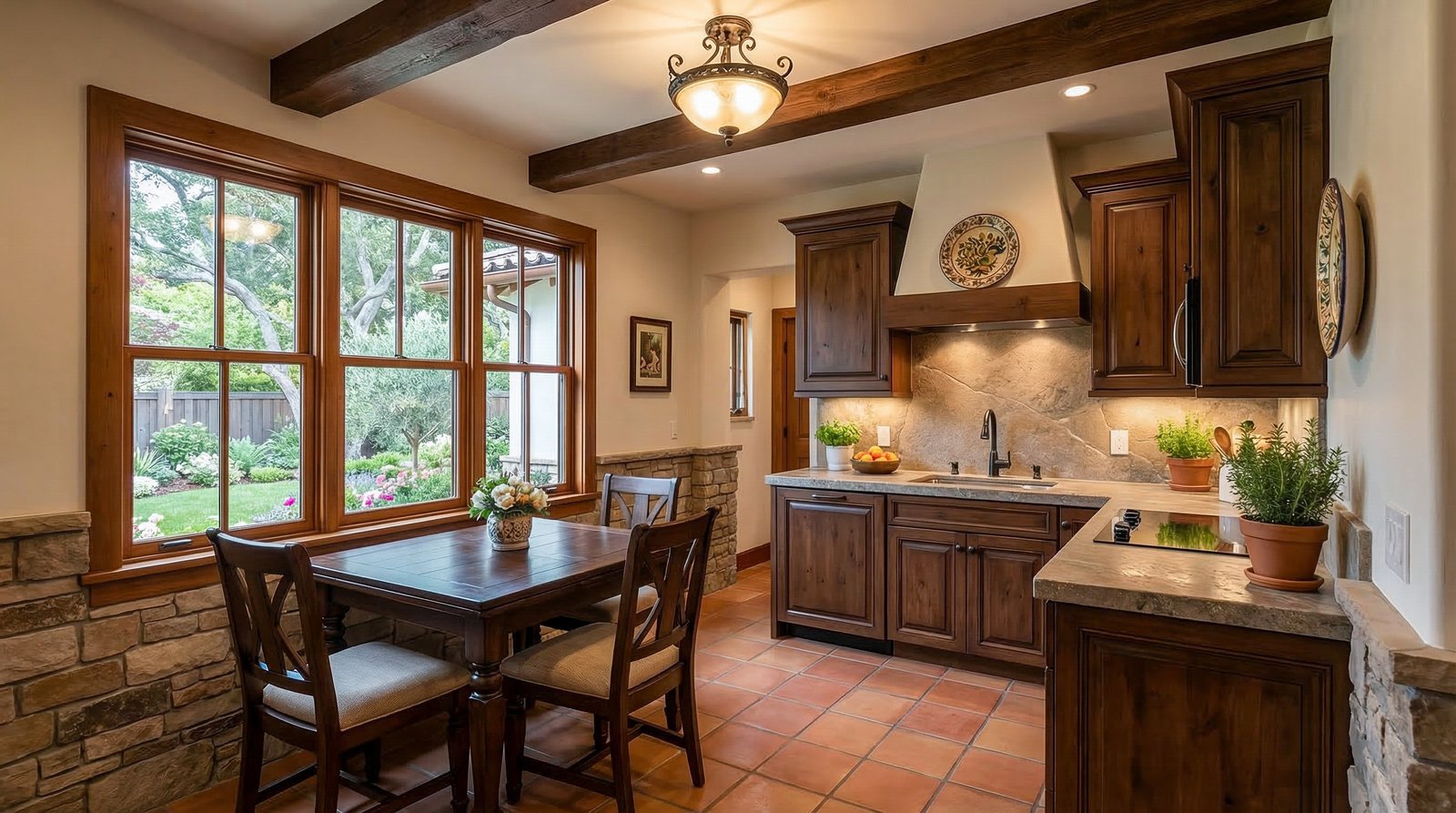
Kitchen: This is where the stone-and-wood palette gets its most functional expression — a rough-cut stone backsplash, alder cabinetry in a deep walnut stain, and terracotta floor tile that continues from the entry hall. A wrought-iron pendant fixture and a hand-painted ceramic plate displayed above the range hood are small, well-placed details that keep the room from feeling like a generic farmhouse kitchen.
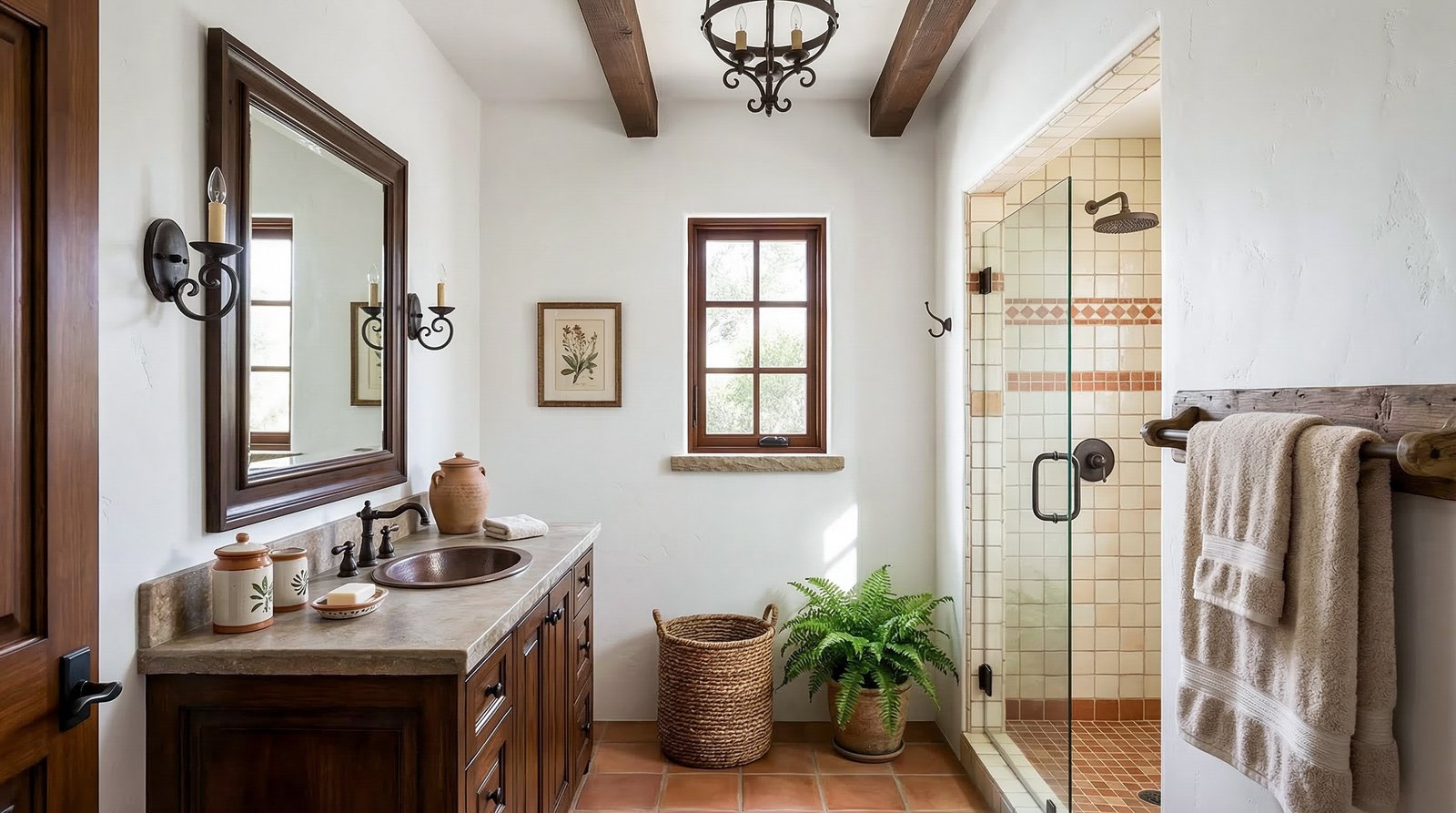
Bathroom: Terracotta tile again underfoot, paired here with a cream-and-terracotta tiled shower and a hammered copper vessel sink. Dark wood cabinetry and iron sconces with candle-style bulbs keep the room from feeling clinical, closer in spirit to a countryside inn than a standard en-suite.
Why the Style Works
What makes this design cohesive rather than busy is discipline in the material palette: stone, terracotta, dark stained wood, and warm white stucco or plaster repeat in every room, indoors and out. The Craftsman gable and exposed beams add structural honesty and a slightly rugged edge, while the Mediterranean stucco, terracotta, and olive trees keep the overall feeling soft and sun-drenched rather than heavy. It's a useful reference for anyone designing a small single-story home that wants warmth and texture without leaning on strong color or ornament to get there — the materials themselves do the work.